June 12, 2007

Naruto by Masashi Kishimoto


Screw any elitist who tells me that this isn't worthy of any kind of literary review, even one as humble as my own. Naruto is a series I enjoy greatly (moreso than the anime, although that's fun too), and I think it's just a good read that anybody who likes graphic novels or manga will enjoy. Let me start with the basics.
The title character is Naruto (who for some inexplicable reason always wears orange pants and an orange jacket), a shinobi (the original word for what we now commonly call ninja) just out of shinobi school. He's none too talented, smart, or attractive, but he's blessed with tons of energy and an incredible will become the Hokage head ninja of Konoha village). The first volume deals with Naruto's attachment to a team which includes a boy he hates and a girl he has a crush on and their inevitable disasters in trying to pass the tests their teacher puts in front of them. Needless to say, they do eventually start learning how to work together and at least become real ninja. Fortunately, the rivals don't just eventually become the best of friends (a cliche that goes back at least to Dumas), they pretty much stay rivals. That's an example of one of the better features of this manga; the relationships feel somewhat realistic and have a greater depth than you commonly see in youth-oriented graphic novels and manga. That brings up another point, which is that the Naruto anime is, in America, targeted to younger audiences, whereas the manga is really written at more of the YA level. Now I haven't seen much in the way of sex alluded to, but there is more violence in this manga than any 10-year-old's mom is going to approve of, and it gets a little graphic. Some examples include a decapitation and a guy getting crushed to death by sand.
The shinobi "magic" (in reality chakra, based on the idea of human bodies being endowed with natural energy) doesn't come off as stupid, and as a matter of fact seems to have some rationale behind it. There are quite a few instances where the mechanism by which they perform some feat is explained, and in their world it is consistent. That's certainly better than most American comics oriented towards youths are, not to mention the sometimes imbecilic American cartoons where the authors felt no need for consistency whatsoever (He-Man, Thundercats, etc). The point is, if you can take Harry Potter seriously despite the fact that people actually fly around on brooms, you can handle Naruto.
Furthermore, character development is deeper than you'd expect for a manga about kid ninjas. Some of them have traumatic pasts, some don't, and their interactions all make a decent amount of sense. I really think Naruto's characters are the best part about the series, followed by tense, relatively uncomplicated stories.
The art of the books is no great shakes. Some of the panels are nothing but speed lines and a blurry shape intending to portray someone's awesome speed and technique. But the effect can fall flat when you can't make heads or tails of what's going on in the frame. Character design is basic, with most males being extremely similar except for things like facial hair and what they wear. Manga are always drawn in strict black&white, and I just find that more visually confusing when the artist likes to have a lot of action going on in each panel.
Lastly, as I said about the plot, it's relatively uncomplicated but it does manage not to move too slowly. New characters get introduced and for some reason it's fairly easy to remember their faces and names, so you never get lost when one of the characters starts using someone else's name. That keeps things simple and it means they don't waste panels reminding you who someone is several times. So almost every panel advances the story, and the artists make pretty good use of that to keep the story flowing. Plus which, there is enough plot to fill all that space, so that's not a worry either. They do tend to stick to the basic themes, like power-hungry villains or revenge, but then, so do most books. The question is how well they execute those stories, and in the case of Naruto, I'd say they do pretty darn well.
My recommendation is: Read it! After all, one book does only take about a half hour!

March 31, 2007

Gene Wolfe's "There Are Doors"


Gene Wolfe will always be one of my favorite authors because of the Book of the New Sun (and to a lesser extent the Books of the Long Sun and Short Sun). I've read several of his other works now, and I think the reason I like the Book of the New Sun so much is because it has the least ambiguous plot of all of his works that I've read so far. Many of his books have the characteristic of having a beginning but no real end. The climax or conclusion is merely an ending point, as if the story could go on or could have ended earlier. This is strongly apparent in "There Are Doors". That doesn't make it a bad book though, or not worth reading.

One of the things I like about Gene Wolfe is a quality he shares with Neil Gaiman. Oftentimes, his stories have a dreamlike, not-quite-real property. The difference is that with Wolfe there's the surety of an underlying reality. Gaiman has made clear that his stories don't necessarily have an underpinning of reality; they can be self-contradictory and highly symbolic without feeling absurd. With a Wolfe story I always get the sense that there's something going on under the surface, and if only I could figure it out I would be able to understand what's going on in the story. With all that said, let me get to the actual book.

"There Are Doors" is the story of a man (we never learn his name, really) who meets and falls in love with a woman. One day she tells him she has to leave and warns him about passing through doors that look significant (the title is taken from her warning to him). He doesn't understand her, but predictably enough, he finds a door and accidentally goes through it. He enters into a world where his lover is a goddess (both mythical and real; she's a movie star as well). The other major difference is that in this world, men die after having sex. Their immune systems collapse for some reason.

According to this reviewer, "There Are Doors" is an homage to Phillip K. Dick (with some references to Kafka as well). With the elements of paranoia, mental illness, and the lack of sureness in the reality of the world, this certainly is a reasonable parallel. Unlike Dick though, Wolfe's writing often does not come to an easy conclusion. Dick's work, like Wolfe's, is often very thought provoking. "Minority Report", "Do Androids Dream of Electric Sheep", and "A Scanner Darkly" were awesomely provocative, but all of them included solid plot-based stories. Comparing "There Are Doors" to any of those isn't really fair, as Wolfe didn't include a compelling story like any of those.

Of course, one can criticize Wolfe's book for exactly that point without comparing him to Dick. Wolfe is a master of language, even when using it as simply as he did in this book. It gives it a completely different texture from other works of his, like the New Sun. Plus he does something many writers just can't manage to do; he gives his main character a voice that sounds different from other characters. Tolkien exemplifies giving different characters different voices. Tolkien also wrote a slammin' plot-based story that's still the archetype for fantasy, but you can easily complain about character development. Point being, no book has it all. Wolfe's often don't focus on the plot as much as character interaction (that is, interaction between the character and the world, other characters, and whatever animate or inanimate objects populate it).

The story of this book is simple enough; once Mr. Green (which we think we discover the main character's name to be) passes into the alternate world, his search for his lost love begins. But almost immediately after it has begun, it ends with him having an accident and being put in the hospital. We find out there that Mr. Green was a mental patient in his own world. The deeper implication is that perhaps this world is nothing more than a mental construct in his own mind. A few events occur and Green is sucked into some kind of conspiracy by a paranoid psychotic named North. After being nearly blown up, he returns by accident to his own world a month later. There is some skewing of time evident, as he was only in the alternate world for a few days. He ends up being in his own world for years before returning to the alternate. He does manage to return, and in the end finds his goddess, only to be relegated to the role of something like servant. In the end, he departs again to find her in her true home with a map that shows no roads or cities.

This book isn't easily understood, but I'm not going to find fault with it for that. Counting Heads was far too easily understood, but that didn't make it a good book. Karen Armstrong points out that mysteries don't always exist to be solved, but rather to be contemplated. This book may be such a mystery, and is definitely worthy of being contemplated.

February 16, 2007

Guests of the Ayatollah by Mark Bowden


This is the story of the Iran hostage crisis which began in 1979. Before I read this book, I had no idea how much of an impact the crisis had on the US and Iran. Not merely shaping how each viewed the other, but even influencing politics inside those nations.

The book goes into great detail on certain aspects of the hostage-taking and follows some, but not all, of the hostages from beginning to end. Of the 52 hostages inside the embassy, only about 12 are mentioned more than once. This is not a drawback, of course. Bowden is using a representative sample as a complete account of every day of every hostage would be an incredibly long, boring, and ultimately unenlightening book. Moreso than in Black Hawk Down, this book covers the wider implications of the crisis, including Carter's response and the Ayatollah Khomeini's irrational and unpredictable behavior. Not only does he relate simply what the leaders and actors in the crisis did, but why they did it.

Bowden, it hardly needs to be said, writes excellently and this book tells a fascinating story. The story, of course, is true and would stand on its own regardless of who wrote it, but Bowden crafts a tight storyline. The book is just too thick and the plot too intricate to even summarize, but some of the more important reasons to read this book are the effects this crisis had on the Carter administration and the future of the Iranian government. Carter's moderate response to the crisis is what eventually led to his loss of reelection. The responses of the members of the Iranian government who opposed the takeover are what led to the supremacy of the Islamic hardliners and the continuing tyranny of what Bowden describes as the "mullah-ocracy". As a case in point, it should be noted that current President Ahmadinejad was one of the original planners of the takeover. Some of the hostages even claim he was one of the interrogators.

Of course the human drama is worth reading as well. The hostages were in doubt of their futures and lives until the moment they were told they had crossed out of Iranian airspace. The long, laborious process the diplomats faced in even figuring out who to negotiate with in the almost non-existent Iranian government also provides worthy reading.

To get back to the larger historical picture, the hostage crisis could be blamed for much of ills that have plagued the Middle East for the past 25 years. When the embassy was taken, the US froze Iranian assets, including equipment for the military that the Shah had already paid for. Because of Iran's state of disorganization and unpreparedness, Saddam Hussein felt Iraq was well poised to strike and seize the Shatt Al Arab, as well as some valuable oil fields. If Carter had been reelected, the US would not have dealt with Saddam and given him weapons (of mass destruction!), and possibly, even probably, we would not be in a war there now. If Iran's moderate government hadn't been toppled due to the instability caused by the seizure, Iran might be a moderate democracy and would never have backed terrorists.

Lastly, this book provides some insight into how Iranians viewed and view the US. It's not what you might think. There are and have always been those who sympathized with the US and wished to have normal relations with us. There are those who believe America is the Great Satan (and they're usually among the most ignorant). One also gets to see what Khomeini was really like, and it was more like a powerless puppet than you might think.

Anyway, that's all I can think to say for this book. You need to read it, unless you already know everything there is to know about the history of Iranian-US relations.

February 14, 2007

All the Shah's Men by Stephen Kinzer


This book provides an excellent starting place for anyone who wants to understand the United States' relationship with Iran. It covers the events surrounding the US-backed overthrow of Iran's democratically elected Prime Minister Mohammed Mossadegh. At first, it might sound like this book exists to blame the US for its actions in Iran and point out how they have come back to haunt us, but while that's definitely a lesson to take from the book, this is a solid history.

There's no strict timeline in the book; the focus is on several different players over time. The story begins with British oil interests in Iran which coalesce into the Anglo-Iranian Oil Company. The name may imply partnership, but the British steadfastly opposed allowing the Iranians any more involvement than manual labor. The book also covers Mohammed Mossadegh's life and rise to power. Mossadegh was and still is a central figure in Iranian history. If his government hadn't been overthrown, Iran might now be a moderate democracy experiencing growth pains instead of a repressive Islamic state ruled by tyrants. The central conflict of the book was Mossadegh's decision to nationalize Anglo-Iranian in 1951, a decision that sent the British into paroxysms of self-righteous rage. Ironically, the British had nationalized industries shortly before in the name of national interests.

From then on, the story was full of British intransigence, and Iranian stubbornness. The British kept hoping they could use the Shah to overturn Mossadegh and absolutely refused to accept the truth of the situation in Iran. Their entrenched racism comes through quite clearly in quoted documents. In truth, the British come off looking pretty ridiculous throughout it all. They certainly had some claim to remuneration, but since they were pretty much exploiting Iran's people and natural resources, the reader won't be highly sympathetic to their claims. The British also unfairly bullied the US on the issue. Truman showed remarkable restraint in trying to work out a diplomatic solution, but the unwillingness of both sides to compromise doomed his efforts to failure.

The coup actually doesn't take up much of the book, because even though it was central to the story, it was a relatively minor event. Unlike other coups, this one didn't dissolve the government, but rather put it back in the hands of the Shah. The Shah comes across as a vain, cowardly man who, although he desired a modern and moderate Iran, was unwilling to do it the right way through transitioning to a democratic government. He believed in his divine right to rule (and surely felt justified when his SAVAK secret police killed dissenters).

The United States' role in the coup is laid out in detail in this book. With the shift in administrations from Truman to Eisenhower, the US took a different tack. The Eisenhower administration placed first importance on containment of the Soviets and the British painted Iran as ripe for a Marxist takeover (it wasn't). The Dulles brothers decided that supporting Britain was in the US' interests, and from then on pressured Eisenhower to allow them to do something about it. It was only a matter of time before he gave in. Kermit Roosevelt, CIA agent and grandson of the famous President Theodore Roosevelt, was almost single-handedly responsible for bringing about the coup. He made the arrangement, found the contacts, and spread the money around.

If you've ever wondered why Iranians marched around the US embassy shouting "Death to America" or "Death to Carter" or "America is the Great Satan", this book is the place to start. The "popular" uprising against Mossadegh was nothing more than mobs and thugs paid off by Kermit Roosevelt's agents to march against him, and in one stroke Iran was taken off the path of Democracy and freedom and began its slow decline into the Islamic tyranny that it is now, where full-body coverings for women are mandated by law and journalists that speak against the Imam may be beaten. It's true that we didn't directly do that to Iran, but it's also true that we made it possible for it to happen.

Judgments aside, this is a great compact history of the coup, its prelude and its aftermath. I'm sure there are larger, more comprehensive ones, but surely none this concise and well written and interesting to read. Given Iran's place in the papers these days, I suggest you start reading.

December 28, 2006

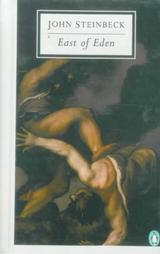
East of Eden by John Steinbeck


Been a while since my last post. I've read more than one book since then, but I wanted to take the time to write about Steinbeck's "East of Eden", because our book club just finished reading it. Well, I finished it last month, but I was the last one. It's been a busy semester, ok?

In case you're not familiar with this book, the story, in short, is that of Adam Trask, and East Coast migrant who settled in the Salinas Valley in California. This is Steinbeck's home, and he even set himself in the story as a relative to a character who was Adam's friend. Adam settles there with the girl of his dreams who happens to be some kind of sociopath. They have twin boys, and then other events ensue. By the way, Mildred tells me the movie mostly deals with the sons when they're older teens, but the boys don't reach that age in the book until the last 100 pages or so.

Actually, this book is too big to really talk about properly without writing a small book about it, so I'm going to cut it down to a couple of things that really interested me. One was that in this book, more than in any other I've ever read, the author explicitly stated what he was thinking and talking about in his book. The mechanism for this was several dialogues that took place between Adam, his Chinese servant Lee, and his friend and neighbor, Samuel Hamilton. The theme of the book, in my own words, is basically that a person can choose to do good or bad. No one is predestined to be good or bad, nor are they bound to the mistakes of the past. This theme was explicitly discussed among Sam, Lee and Adam at several points.

Mildred felt that this was a rather clumsy device and she would have preferred him to use more oblique methods of making readers aware of his intentions. It didn't bother me so much, but I can see that some readers might not like his device of explicitly stating his theme, then using his story to provide examples proving the truth of it.

After some discussion, Mildred and I weren't sure that Steinbeck ever did prove his point. Just about all of his characters fell to temptation, and he demonstrated that Aron, perfect though he was, simply couldn't live knowing that he came from something so evil (Cathy). Speaking of Cathy, nobody I talked to about the book really understood her, or rather why she was the way she was. Yes, she lacked some essential human component. What it was, I'm not sure, nor why. I didn't like that so many of his characters were so sketchy, especially the women. Again, Cathy was very poorly explained for being such a bad person, but the other women, although often portrayed as very good, simply were taken for granted. Steinbeck must have felt that it was unnecessary to explain the women as either good or bad, so he spent more time on the men.

But to get back to my earlier point: Steinbeck never demonstrated the principle of timshel (thou mayest) with any of his characters. Perhaps Caleb went off to lead a stellar life after the book, but during the book all the characters made the mistakes that you'd expect them to make. I don't say that this was necessarily deliberate on the part of Steinbeck. Mildred and I think that it was actually rather unintentional, and that while he was trying to write the story to prove his point, he wrote the characters the way he truly saw people. Not without love, but with a sure knowledge of their fallibility. He expected them to disappoint, and disappoint they did. But I suppose he ended it appropriately enough anyway; when Caleb begged for his father's forgiveness, Adam merely said "timshel", meaning that Caleb could live with or without it just as well. At least, that's what I thought. Perhaps Steinbeck truly meant something different.

With a title like "East of Eden", one does expect biblical parallels. Obviously this story was a sort of modern retelling of Cain and Abel, with Caleb and Aron filling those roles, respectively. Steinbeck basically says as much throughout the book, but he doesn't make other biblical parallels as explicit. For example, the Salinas Valley must have been the Eden of this story. Adam and Cathy were, to some extent, Adam and Eve, although while Adam Trask was as ignorant as the original Adam, Cathy was the snake in the garden, not the woman tempted. The parallels aren't exact, obviously. Adam and his brother Charles might have been Cain and Abel, too, except Charles never took the opportunity to slay his brother. Of course, in Adam's role as Adam, that made his father god and if you recall Adam's father, it must be that Steinbeck wasn't a big fan of god. Or perhaps that's extrapolating too much.

In any case, I felt like one of the purposes of the story was simply to demonstrate the inherent truth of the Cain and Abel story. Not the standard interpretation one tends to get in church, that Abel was the good son who sacrificed properly, but rather that Cain was unjustly punished simply because God preferred Abel's sacrifice to his, and for no good reason. Abel was simply more lovable, but no better. Rather heretical too, so I'm wondering if any churches ever sponsored a book burning for East of Eden. All throughout, Adam was better loved than Charles simply because he was more lovable, and Aron was better loved than Caleb for the same reason. And after much discussion, Mildred and I did agree that there is some validity to this interpretation. It does indeed occur in reality, although perhaps not so often as Steinbeck might have made it appear.

Finally, I have to say that of all the Steinbeck I've read (which I admit is only a couple of other books), this is my favorite by far. I liked the writing and I liked the story. The characters weren't always believable, but even so, they were good characters. I do recommend it, although this is certainly a book you really have to put some time into. If you do though, it'll be worth it.

November 09, 2006

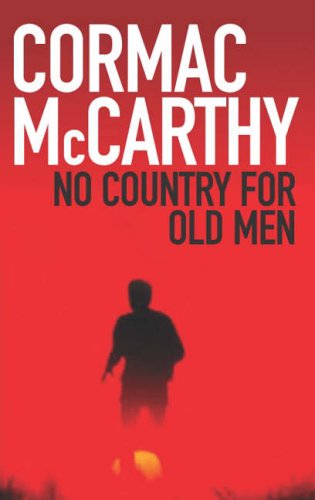
No Country for Old Men by Cormac McCarthy


McCarthy, in case you don't know him, is probably most famous for his "Border" trilogy, one of which, All the Pretty Horses, was made into a movie recently. He's been writing for around forty years though, so he's no newcomer. He also released a book called The Road just a few months ago, which is a sort of post-apocalyptic work, although in no way like the Left Behind series.

You might read this book and be deeply touched by McCarthy's astounding prose. You might read this book and put it down three-quarters of the way through because of the almost pointless story. Either way, I would say you're right. The caveat is that this book is not about the story. It's about the meaning of the story.

The story is basically that a drug deal goes bad, a young Vietnam vet finds the money (the book is set in the early 80s), and he ends up going on the run from a psychopathic killer set on retrieving that money. A Texas sheriff follows both of them, trying to save Moss, the Vet, from Chigur, the killer. The story is told from the point of view of Moss and the Sheriff mostly, although at the end the narrative does follow the killer as well.

I enjoyed the writing. It's especially good if you listen to the audiobook, where the reader enacts appropriate accents (Texas accents), or if you can make the characters sound like that in your head. It makes more sense that way. McCarthy almost matches the dryness of Steinbeck's The Red Pony in the dustiness of his prose, and it worked well.

The problem, for me, was that this book was organized as a straightforward chase/thriller...until the chase ended and there was still a quarter of the book left. That wasn't the only problem. You would expect that when the killer catches up with the vet, that would be the climactic scene. And yet such scene is completely absent. The narrative skips right by it and you find out post-mortem from the sheriff. And then the book goes on anyway, not to tie up loose ends but mainly so that the sheriff can talk a lot about his thoughts. Not that hearing from the sheriff was bad; he did have a lot to offer. But McCarthy really shouldn't have written all that chase stuff if it was going to be so pointless, which it was. Heck, he adds in a character in the middle of the story only to have him killed off a couple of chapters later. Why? I have no clue. He served no purpose whatsoever.

If this was going to be some retrospective by the sheriff, it should have been that; not a chase set in real-time. It would even have made more sense that way, and it would certainly have been worth it if he could have taken that story and made some coherent point out of it.

The sheriff, I think, is a the method by which McCarthy can explicitly expound on the theme of the book without stepping in as a godlike narrator, which would have been unberably cheesy. However, I just don't think McCarthy used him to best advantage, and the book left me wondering what the point was in reading it.

If you're a McCarthy fan, by all means read it. The reviewers on Amazon seem to have enjoyed it much more than I did. Otherwise, you can really live without it.

September 12, 2006

The Great Transformation by Karen Armstrong


Karen Armstrong is a former nun who renounced her vows and is now a prolific writer on the subject of religion. Some of her other works include A History of God and Islam: A Short History. Her work always display an incredible breadth of knowledge as well as very insightful analysis. While this results in books well worth reading, it often makes those same books difficult to read because of the sheer volume of information she puts into them. Her latest book, The Great Transformation, has both of those characteristics as well.

The title of "The Great Transformation: The Beginning of Our Religious Traditions" is, in short, what this book is about. To those who believe in a the literal truth of the creation story (whatever the religion), the answer to that is obvious, of course. However, in actual fact the great religions of the world, including those of the so-called Judeo-Christian tradition as well as Buddhism and Hinduism, are really artifacts of ancient human make. However, they did not arise out of a religious vacuum, nor did they arise quickly. The questions this book seeks to answer are, what conditions did those religions arise out of and why did they arise?

Armstrong seeks to answer these questions in a chronological format, giving the history of the era (thus answering the first question) as she builds to an answer for the second. She covers the time, roughly, between 900 BC and 200 AD (although she chooses to use the contemptible CE terminology). The history of the era is one of great violence and turmoil. Peoples were on the move, and empires rose and fell, shattering the idea of permanence. To people who had belonged to state-centric religions, where the religion reflected and supported the "natural" order of kings, priests, and people, when the empire fell the religion was no longer valid. Without religion, they had nothing to affirm their existence, and needed a substitute. Animists, of course, wouldn't be troubled by this, but even most animist traditions relied on the idea of permanence.

Armstrong chooses to focus on four spiritual centers: Greece (more specifically Athens), Palestine (the land, not the country, obviously), India and China. While this seems simple enough, the picture is actually rather complex. Naturally, one may wonder what great religious tradition arose out of Greece. The answer is none. Their answer to the problems of the Axial Age was not religious in nature, although it was at times also spiritual and philosophical. The religions or spiritual traditions that did arise are quite numerous, more than the easily remembered Judaism, Buddhism or Confucianism. All were attempts to face the uncertainties of the world, and all attempted to find a way to live at peace with an un-peaceful world.

The bulk of the book details the developments of these religions in parallel with events in history. I felt that she made quite adequate arguments demonstrating how and why these developments were responding to outside events. That's one of the best reasons I could give for suggesting this book to readers. To my knowledge there is no other book that covers that territory for more than one religion, and it's quite enlightening to see them developing in parallel. It gives one a much more solid grasp to be able to place history in context than as an isolated incident.

The title might lead one to think that this book talks about the early days of each of these great religions. That's the last thing that she gets around to, and takes up the least time. I suppose many people don't know that religions don't just pop out fully formed, like Athena from Zeus' head. The religion of the Hebrews in the Bible (or Torah) was nothing like the rabbinic Judaism of today. Armstrong takes much more time explaining to us the Judaism of the prophets than in describing rabbinic Judaism (presumably because the reader is either more familiar with it already or there are many worthy books about precisely that). Her concern is mainly the gradual mutation that ends in these final religions or philosophies, and she stops basically where they have become at least the rudimentary version of their final forms.

All in all I think the book is well worth reading. Although she makes an attempt to draw a conclusion at the end that the stale religions that focus on doctrine rather than understanding and which assert that only their knowledge is the correct knowledge are useless and detrimental, she really doesn't spend too much time on that theme either, although it is certainly a worthy and interesting assertion. And yet of a four-hundred page book, the conclusion is only ten pages long. Perhaps she's saving that for yet another book.

All in all, I say read this book. It's challenging, to be sure, but in the end quite rewarding as well.

September 10, 2006

Terrorist by John Updike


Terrorist is the story of a teenage boy in New Jersey who is enlisted into a plot to carry out a devastating attack on America. Ahmad Mulloy Ashmawy is the son of an Arab father (who abandoned them) and American mother (of Irish descent). He grows up devoutly religious, not through any effort of his mother's but for some ambiguous reasons the auther fails to fully identify. All the other characters are essentially worthless to the plot, even the school guidance counselor, Jack Levy, who gets almost as much time as Ahmad.

Evidently a lot of people love this man's writing, but they must be loving something else because this book is about worthless. Forgetting the issue of PC-ness he broaches by having an Arab-American as the terrorist of the title, it's just not very likely. Other reviewers have said that he chose this character as his instrument to reflect on the state of America today, and his origin serves solely as a plot device to cause his disaffection with this society. But I think if that's the case, it's a weak and unnecessary device, given that there are plenty of Americans who are as disaffected and more prone to violence than some half-Arab New Jersey teenager. As a matter of fact, although it's a topic not often discussed, the main terrorist threat in America comes from white Christian extremists. These people aren't even theoretical; they've actually been responsible for real terrorist acts all over the United States.

Be that as it may, Updike is one of the least astute character writers I've ever read. If anyone reading this doesn't like that assessment, I suggest picking up Dostoyevsky's "Crime and Punishment" or "The Brothers Karamazov". Now that's some character writing. I just felt like he endlessly described people's outsides and never touched their insides. It's a book, which means that you have the ability to show the reader the thoughts and feelings of a person, but not to adequately depict their facial expressions or colorations (in other words, it's not a picture). And yet he rarely took the opportunity to get inside anyone's mind, even the main character Ahmad's. And what little internal narration he did give Ahmad was pretty much the same thing over and over again. As for the other characters, he may have intended them to be mockeries of real people instead of making them real people, but if he was doing that I certainly didn't pick up any hints of satire to clue me in. The whole book was dead serious, and dead boring.

I tend to lump all books into two main categories: they're either about the characters or the plot. Given that the characters were such a failing in this book, you might be tempted to think the plot redeems it in some way. You would be wrong. The story itself advances slowly with about three-fourths of the book being wasted in unnecessary build-up (which would be fine if there were decent characters, but as it is...). The climax is so anti-climactic it actually made me sleepy. There's absolutely no payoff in the end.

If you're a fan of this guy, perhaps this book could work for you. For me, it was an unfortunate reading choice and a complete waste of time. If you want to read books about domestic terrorists that are just as implausible but a lot more exciting, pick up Tom Clancy.

September 05, 2006

Road Work by Mark Bowden


This is a sort of compendium of shorter works by Mark Bowden (journalist and author, most famous for Black Hawk Down) comprised of 19 stories on a variety of topics. As an example, he covers the issue of torture, a small bio of Saddam Hussein, the historic rivalry between two high school football teams, the genetic engineering of cattle, and even the story of the world's oldest living gorilla. There's something for everyone there.

I think Mark Bowden is a great journalist, because he writes the kind of in-depth stories that I like to read, and if you've read Black Hawk Down, you know he's a master at keeping personal bias out of it. Some of these stories are more personal though, and call for that kind of personal commentary, so you do get a different experience here than in a longer work like Black Hawk Down.

This is a good book if you want to read some non-fiction but don't want to commit to a 400 page book on one single topic. If you're the kind to get bored to tears by non-fiction but you still want to read it sometimes, this is the book for you. Not only are the stories short and entertaining, Bowden is a solid writer.

I suggest you pick this up at the library and give it a try. You may just find you want to read Black Hawk Down after all.

August 29, 2006

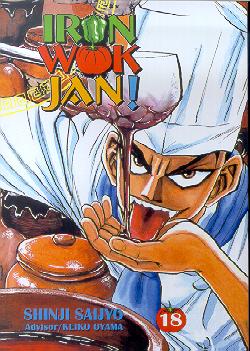
Iron Wok Jan by Shinji Saijyo


Jan is a young chef who has been trained in the art of Chinese cuisine by his grandfather. When the story opens, he has just been released from training and sent into the world of Chinese restauarants (in Japan) at the restaurant of his grandfathers's old friend, Gobancho. Jan doesn't inspire much friendliness in the staff because his motto is "Cooking is about winning", i.e., proving that he's better than all the other chefs in the world. He has major clashes with the owner's grand-daughter, Kiriko Gobancho, and the third young chef-in-training, Celine Yang. Neither of them appreciate his elitist attitude, nor his disdainful way of treating them.

I like this book mostly because it's funny. Although they go into great detail about a ton of different recipes and kinds of food and culinary secrets, that's not the main attraction. Jan is dead serious about cooking, and the book takes it seriously too. But I like when there's comic relief, especially when Okonogi comes up with yet another crazy dish, like spring rolls with appetizers stuffed inside.

I have to admit this isn't the best manga out there, and it's not something I'd usually read, but it's actually got a compelling story and the characters have just enough depth to make them worth reading.